What does a TPO roof actually cost in Ellettsville?
For a straightforward tear off and TPO install on a commercial flat roof in Ellettsville, expect to land somewhere between $7.50 and $14.00 per square foot installed. The spread is wide because three big variables move the number: membrane thickness (45-mil, 60-mil, or 80-mil), insulation R-value, and whether your existing roof can be recovered or has to be torn off down to the deck. Recover jobs save real money because you skip disposal fees and labor for removing old material. Tear offs add cost but give the crew a clean substrate and a fresh chance to address rotted decking, soft insulation, and failed flashings.
How does the install process actually unfold?
A TPO job moves through predictable phases, and knowing them helps you spot a crew cutting corners. The first phase is the pre install inspection, which should include a core sample so the contractor knows exactly what is under the existing membrane. Next comes setup: dumpster placement, fall protection, and a staging area that keeps your tenants and customers moving. Tear off happens in sections so the deck is never left exposed overnight, which matters in Ellettsville where afternoon storms build fast. After the deck is verified sound, insulation boards are mechanically fastened or adhered, then a cover board goes down, and finally the TPO membrane is rolled out, fastened or fully adhered, and the seams are hot air welded. Flashings at curbs, drains, and edges are detailed last because they take the most skilled hands on the crew.
The attachment method matters too. Mechanically fastened systems use plates and screws through the membrane into the deck, which installs faster and costs less but can flutter in high wind. Fully adhered systems use bonding adhesive across the whole field, which holds tighter, looks cleaner, and performs better under uplift but adds labor cost. Ballasted systems are rare on new TPO in Ellettsville because the weight load rarely makes sense for our building stock. Ellettsville Commercial Roofing walks you through the trade offs based on building height, parapet conditions, and your wind exposure zone before quoting an attachment style.
What does the warranty actually cover?
Manufacturer warranties on TPO range from 15 to 30 years and split into two flavors: material only and total system (NDL, no dollar limit). A material warranty replaces defective membrane but does not pay for labor, tear off, or consequential damage. A total system warranty covers labor and is what you want on a major investment. Both require regular inspections to stay valid, which is why an annual commercial roof inspection is more than a formality. Skip those checkups and a future claim can be denied.
How do you know if you need replacement instead of repair?
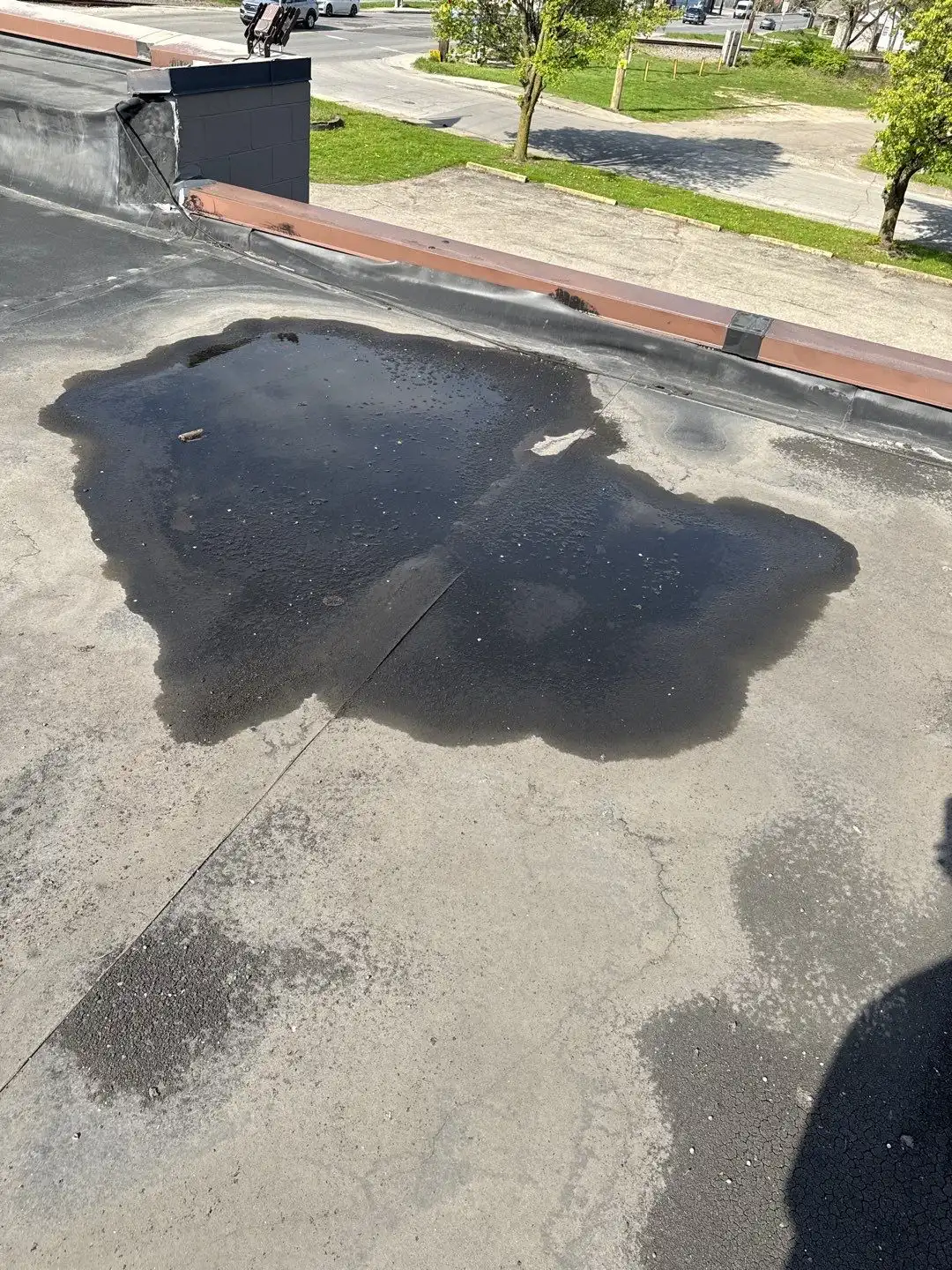
If your existing roof has widespread blistering, multiple active leaks, saturated insulation showing on infrared scans, or seams separating across large areas, replacement is the smarter spend. Patching a roof past its service life burns cash and never stops the leaks for long. If you are uncertain, ask for a moisture survey before committing either direction. We give you the honest answer based on what the roof tells us, not what the calendar says.
How long should the project take?
A small 5,000 square foot roof can finish in three to five working days when weather cooperates. A 30,000 square foot job typically runs two to four weeks. Rain delays are the biggest schedule wildcard, and any honest contractor will build buffer into the timeline rather than promise a hard end date. If active leaks are damaging your interior during the project, the crew should prioritize dry in and temporary tarping on exposed sections before moving forward. For owners dealing with leak damage that has already reached the interior, our team coordinates with our commercial roof repair crews to address ceiling and insulation issues in parallel with the new install.
What thickness of TPO should you choose?
Membrane thickness is where a lot of money decisions get made. The 45-mil product is the budget option and works on protected roofs with little foot traffic. The 60-mil is the workhorse choice for most Ellettsville commercial buildings and carries manufacturer warranties up to 20 years. The 80-mil costs more but gives you a thicker weathering layer, better puncture resistance, and warranties that can stretch to 25 or 30 years. If your roof gets regular service traffic for HVAC units, satellite equipment, or window cleaners, the upgrade to 80-mil usually pays for itself in deferred repairs. We cover the broader membrane comparison in our breakdown of TPO vs EPDM vs PVC if you are still weighing systems.
Color choice is another small decision with real consequences. White TPO is the standard and reflects roughly 78 to 87 percent of incoming solar heat, which can drop summer cooling loads noticeably on a building with rooftop HVAC. Gray and tan options exist for aesthetic reasons but reflect less heat and may not qualify for the same energy code credits. For owners in Ellettsville who track utility spending closely, sticking with the highly reflective white surface is almost always the right call.
What should you ask a Ellettsville contractor before signing?
Four questions separate a serious bidder from a tailgate operation. Ask which manufacturer certifications the crew holds, because total system warranties require certified installers. Ask for a written scope that lists membrane thickness, insulation R-value, attachment method, and edge metal gauge. Ask how deck repair, wet insulation, and code upgrades are priced as unit costs rather than lump sum guesses. Ask for references on flat roofs of similar size and age in Ellettsville. Clear answers in plain language are a strong signal. Vague answers or pressure to sign fast are a signal to keep shopping.
What hidden costs surprise building owners?
Three line items catch people off guard. First is deck repair: once the old roof comes off, soft or rotted decking has to be replaced before new insulation goes down, and that is usually a per board unit cost added to the contract. Second is code required insulation upgrades. Indiana energy code may require a higher R-value than what exists, and that drives both material and labor. Third is the cost of new edge metal, drains, and walkway pads, which are often listed separately. A clean proposal spells these out before you sign so there are no change orders mid project.
A fourth surprise worth mentioning is the cost of working around rooftop equipment. HVAC units, exhaust fans, gas lines, and conduit all have to be lifted, supported, or temporarily disconnected so the new membrane and flashings go in clean. Some buildings need a mechanical sub trade on site for a day or two, and that gets billed through. Asking for an equipment walk through during the bid stage avoids friction later. Ellettsville Commercial Roofing flags this in writing on every proposal so the budget you sign is the budget you pay.